
Macquarie is among the leaders in the sector when it comes to flexible work, with policies that support and enable all staff to create a balance between work and life that allows them to flourish.
But having the initial conversation about flexible work can still be challenging for some staff.
The Vice-Chancellor Professor S Bruce Dowton says an important part of establishing a workplace culture of flexibility and inclusion – a key priority in the University’s Workplace Gender Equity Strategy – is making sure staff have meaningful and fulfilling opportunities, and that we are open to the idea of different ways of working.
“I am a strong advocate for staff discussing ideas about flexible working that can help them to flourish professionally and personally, and I understand that in different areas of the University we need more of these conversations.
“I would encourage staff and managers to approach discussions around flexible work openly, and to think creatively about how to make flexibility work for everyone involved.
“I believe the unique community that is Macquarie University is about our people feeling empowered in their work and experiencing a sense of unity,” he says. “Working with my own staff and the Executive Group, flexible working reinforces confidence in their ability to perform their roles and helps to build mutually trusting relationships.”
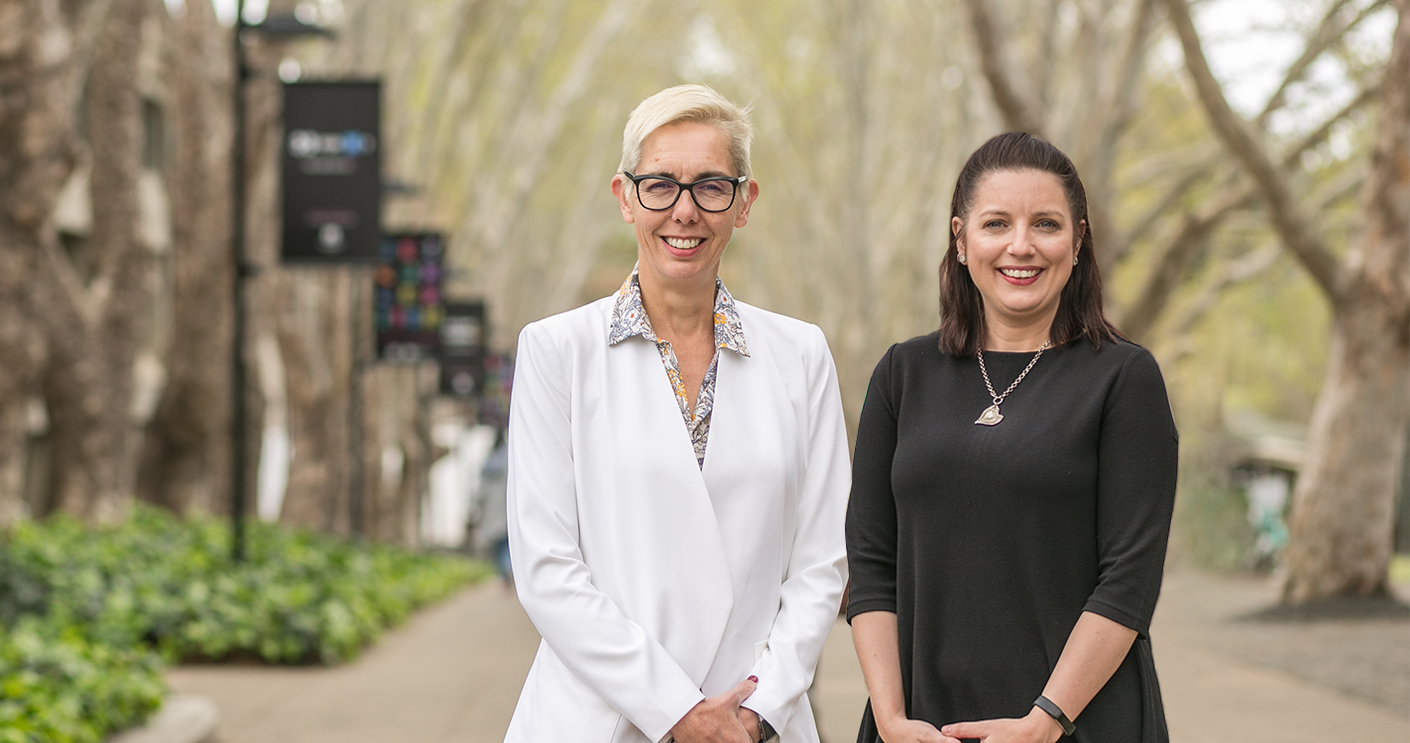
Courtney Bendall, a Research Development Manager in Research Services, and her line manager Louise Fleck, who is Director of the Research Services team, are two people who demonstrate how open attitudes around flexible work can deliver great outcomes for the whole team. We spoke to them about Courtney’s flexible work arrangement and how they’ve made it work for them.
Q: Courtney, tell us about your reasons for requesting flexible work.
I moved outside the Sydney area last year, to be closer to my family. When I was considering the move, I knew I’d have to discuss the possibility of flexible work with Louise, because the commute is very lengthy and having the ability to work from home, or alter my working hours, would be key to making the move possible.
Q: How did the initial conversation go? Were you nervous about making the request?
I wasn’t nervous, because I knew Louise and I had a good relationship and we could be open and honest with each other. The conversation was very positive – we talked about the types of flexibility I was hoping for, how this might impact on my output and relationships with researchers, as well as a probationary period for the arrangement.
Q: Louise, from a manager’s point of view, what kinds of things are important to cover in these initial conversations with staff about flexible work?
I begin with the premise that flexible work arrangements should be possible, so the conversation is more about ‘how can we make this work?’ than ‘why is this necessary?’.
I think it’s important to ensure that the flexible arrangements developed meet the needs of both the workplace and the staff member. You need to discuss what the real requirements of the role are and how those requirements can be met within flexible work practices, as well as set a review date so that any issues arising can be discussed and resolved.
Q: Some managers can be resistant to the idea of their staff working flexibly. Why do you think this is?
I think some managers perceive flexible work as a loss of control over their staff, or they fear a reduction in performance and inconvenience for stakeholders.
I haven’t found these matters to be real concerns. I’m much more interested in staff being able to perform at their best, and when that involves flexible work, I’m very happy to discuss it.
The most important things for me are, first, that team members can perform at their best, because they are not distracted by whatever issue it is that makes flexible work important, and second, that I can retain high quality staff. I would hate to lose a good team member by insisting on, for example, presence on campus every day, if that’s not really a requirement of their role.
Q: Courtney, a successful flexible work arrangement obviously involves mutual trust and an element of compromise for both manager and staff member. What kinds of things do you do to make sure you are still achieving your work objectives while working flexibly?
My work from home days and working hours are completely flexible – I am always on campus for meetings when required and when my role can be conducted more efficiently being on campus.
I also have my phone diverted to my mobile phone and am always available on email and VPN via my work laptop. I also meet with Louise every six months to discuss my flexible work arrangements and make sure the arrangement is still working for both of us – it’s really good to keep that open communication going.
It’s important to me that my manager understands how my working arrangements influence my wellbeing and doesn’t just focus on my work outputs. It’s refreshing that the culture in Research Services – and the University more broadly – is supportive of this kind of thinking.
Visit the Flexible Work page to find out more about the flexible work options that are available at Macquarie. There’s also great advice on requesting flexible work and strategies for making flexible arrangements successful.
If you are a manager and want more information on enabling and supporting flexible work in your team, please visit the Managing Flexible Work page.
 Back to homepage
It’s great to see that some sections of the University still allow flexible work.