
There are fewer life events more momentous than becoming a parent. While it is no doubt a joyful experience for most, it can also be a time of stress and uncertainty, particularly if the path to parenthood is not a straightforward or easy one.
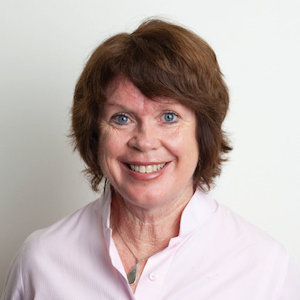
Psychological adaption in the transition to parenthood is a subject that Cathy McMahon knows well. An Honorary Professor in the School of Psychological Sciences, McMahon has published extensively on topics including perinatal mood disorders, infertility and assisted conception, and the parent–infant relationship.
In her recently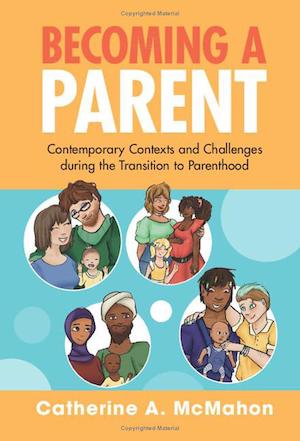 published book Becoming a Parent: Contemporary Contexts and Challenges during the Transition to Parenthood, Professor McMahon looks at the experiences of new parents in contemporary Australia. She also explores the social and policy initiatives that can make the transition to parenthood easier, especially for those who don’t experience a mainstream path.
“Helping adults successfully navigate the transition to parenthood has many benefits – to the couple’s relationship, the relationship between parent and child, and the child’s long-term wellbeing,” says McMahon.
“But while advice about becoming a mother is ubiquitous – with a prevalence of blogs, memoirs and how-to guides – the process of becoming a father has traditionally received scant attention, even though fathers are more involved than ever before in caring for their children.
“Less attention still has been paid to single parents, LGBTQI parents and adoptive parents, or those whose pathways are complicated by painful reproductive histories involving infertility and loss. Becoming a Parent seeks to address those gaps.”
With contemporary babies being generally highly planned and long-anticipated (the average age of first-time mothers in Australia was found to be approaching 30 in the latest census) McMahon says the journey of contemporary adults to parenthood can sometimes seem more fraught than that of previous generations.
 “There’s a pervasive ‘risk management’ mindset – particularly in contemporary Western cultures – that means prospective parents are often anxious to ensure an optimal environment before embarking on parenthood,” she says. “Add to this the growing number of couples needing the assistance of reproductive technologies to conceive, and accurate and up-to-date information becomes very important, particularly around fertility.”
Professor McMahon interviewed a broad range of parents for the book, with their experiences illustrating how strongly context shapes the transition to parenthood. Parents from multicultural backgrounds often described the additional challenge of bridging traditional and contemporary practices and attitudes to parenting and birth.
“In all cultures, a baby acts like a centripetal force that brings families together, but there are strikingly different views about what babies are like, what mothers should do, and what role fathers and grandparents should play,” Professor McMahon says. “I learned that different orientations to parenting – whether medical, psychological or cultural in origin – need to be respected and require different forms of support.”
“The story of Aisha, for example, who became a mother at 20 and a grandmother at 40, is embedded in the cultural practices of the Lebanese migrant community. Marrying young and having a baby was just what you did, and preparation for birth was almost entirely informal – gleaned through exposure and osmosis, spending time with the older women in the community.
“After a physically traumatic birth, Aisha found herself duty-bound to serve drinks, nibbles, coffee and sweets to a never-ending stream of equally duty-bound well-wishers, leaving them to attend to the crying baby only briefly when required. She swore things would be done differently when her daughter became a mother – and they were.”
Becoming a Parent: Contemporary Contexts and Challenges during the Transition to Parenthood is published by Cambridge University Press. An online version is available in the Macquarie University Library.
 Back to homepage