
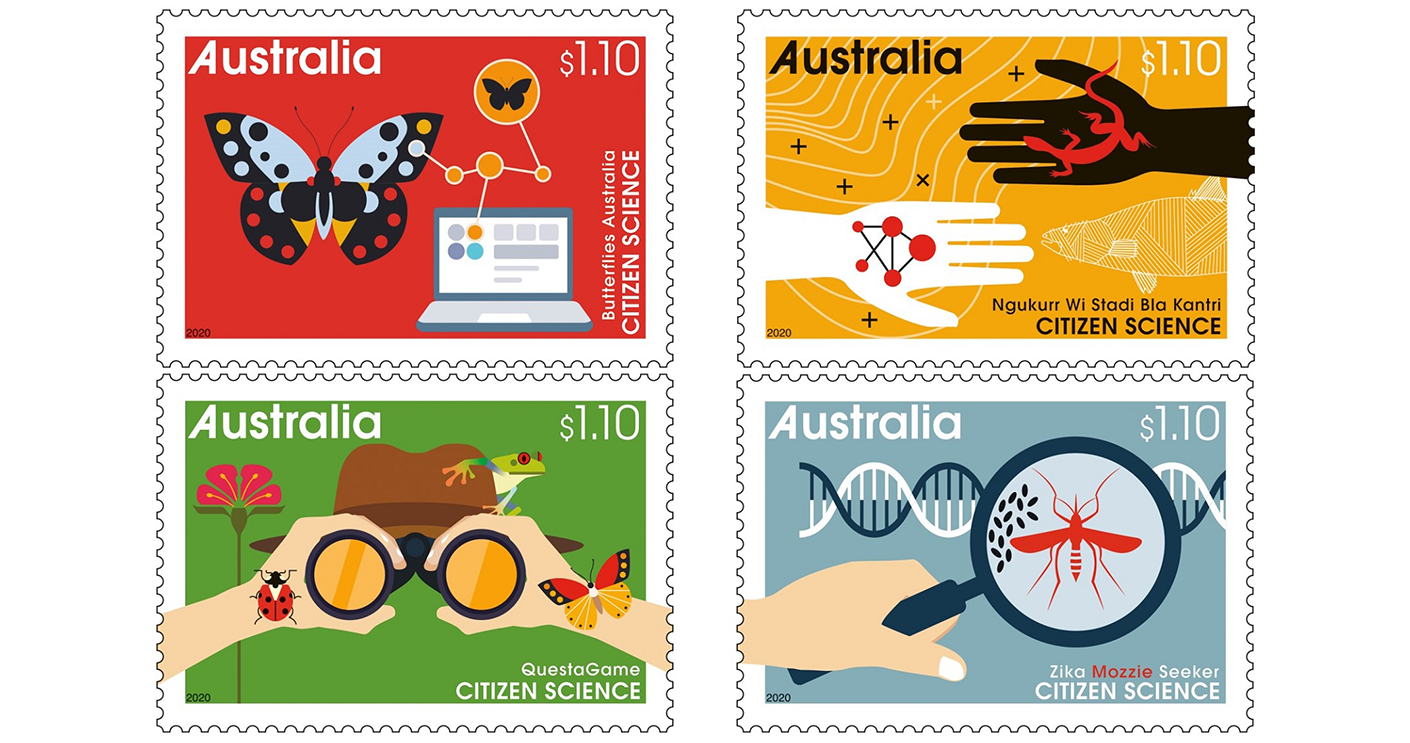
In a unique collaboration between scientists and Aboriginal people, the Ngukurr Wi Stadi bla Kantri (We Study the Country) Research Team has discovered species new to science, found new populations of threatened species, preserved culturally-significant wetlands, and documented the community’s plants and animals in eight local languages.
The project has won a range of awards, and now it’s being recognised in a way few research projects achieve – as part of an Australia Post stamp series celebrating citizen science.
 Co-led by ecologist Dr Emilie Ens (pictured) from the Department of Earth and Environmental Sciences, Cherry Wulumirr Daniels, an Elder of the Ngandi people from remote south-eastern Arnhem Land, and the Yugul Mangi Rangers, South East Arnhem Land Indigenous Protected Area, the research team worked with the community and Indigenous Rangers to better manage new threats facing their country—feral animals, weeds, climate change and altered fire regimes.
The project blends conventional ecological research with traditional knowledge and ways of seeing country. Mrs Daniels (now deceased) explained, “It’s a responsibility to look after those things.”
“We are not doing it for ourselves. We are doing this for our country and for our people and for the sake of our culture, keeping our culture alive and strong.”
The project has brought people from the remote Aboriginal community of Ngukurr back to country, and through the Ngukurr School’s involvement with the research, produced the community’s first university students in over 30 years, engaging students to access higher education opportunities at Macquarie University through a two-way, on-Country, Pre-University Skills course.
Emilie says, “We involve the school kids through holiday camps and teach the senior classes about plants and animals. Kids love technology. So we get them to do video recording and use tablets, computers and cameras.”
They use motion sensor camera traps, cage traps, pitfall traps, Elliott traps and funnel traps to find small mammals, reptiles and frogs, and might also take tissue samples for DNA analysis. “All the field research is linked to Macquarie University and we publish journal articles and have made videos for our YouTube channel,” Emilie says.
More than 300 community members have been directly involved in the research and the project has indirectly reached every person in the community of 1,000. It has also brought over one million dollars of scientific research funding into the community.
The research team is also helping to maintain endangered traditional languages, producing a 143-page community flora and fauna field guide with the Ngukurr Language Centre. The guide lists 275 species names in 10 languages—eight local Aboriginal languages and the species’ English common and scientific names.
“This project is not just about citizens collecting data, but about being integrally involved in all stages of biodiversity research to empower community decision-making about remote land management,” Emilie says.
“We are trying to reach as many people as possible to give them an opportunity to do hands-on scientific research. If people learn more about Country and connect more with it, then they can understand some of the threats and want to be involved in its management.”
She says being on a stamp is a great – and unexpected – honour for everyone involved. And her grandfather is particularly thrilled – he’s a stamp collector.
 Back to homepage