What would a resilient Australia look like?
Arts After Dark: The Illusion of Independence brought experts together to explore Australia’s place in a changing world
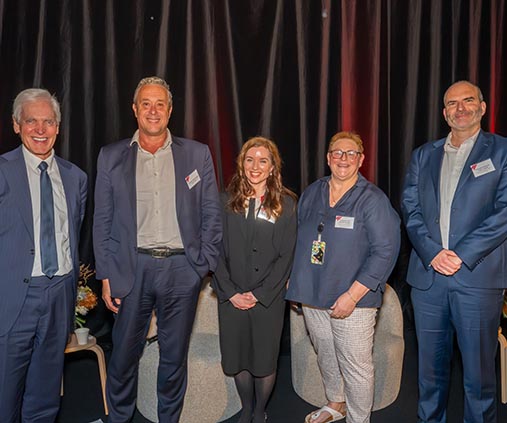
The evening brought together experts from across the University to explore the strategic challenges Australia faces. As geopolitical tensions rise and established patterns of trade and security come under pressure, the panel asked a timely question: what does it mean to be "independent" and what does that mean for Australia right now?
The discussion centred on Australia’s reliance on global systems and relationships, from supply chains and energy markets to alliances, institutions and regional partnerships and what greater resilience could look like in practice. As Professor Julian Droogan put it “More and more we are dependent on almost every aspect of our prosperity. Our security is connected to very complex systems that span not just the region, but indeed the whole globe.”
Our fuel, our energy, our trade, our supply, our supply chains, our information networks, even our security relationships are all dependent on these complex systems.”
Professor Tina Soliman‑Hunter highlighted the strategic importance of resources at the centre of the global energy transition and Australia’s growing leverage in this space, noting: “Australia has critical minerals that are really worthy of the world.”
The panel also considered how Australia is responding to a more contested global environment. Dr Catherine Gascoigne highlighted the country’s ability to adapt, arguing that “Australia has shown quite a lot of agility in reshaping both its strategic and economic partners.”
A new approach to geopolitical risk
Associate Professor Adam Lockyer, Executive Director of the newly launched Macquarie University Geopolitical Risk Research Centre, also featured on the panel. Announced during the evening, the Centre will bring together academic expertise and industry‑informed experience to help organisations navigate an increasingly complex geopolitical landscape.
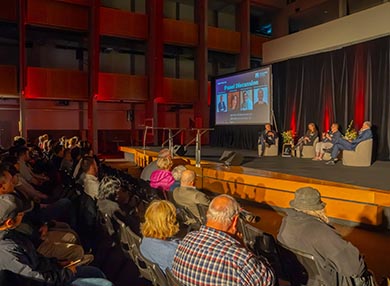
The Centre’s work will draw on expertise across geopolitics and security, law, trade and energy flows, alongside broader capability from across the University. Its focus is practical and problem‑led: helping decision‑makers better understand vulnerabilities, anticipate disruption and respond with clear, workable strategies.
As Associate Professor Lockyer puts it: “We’re not just looking at the causes of the risks; we also want to look at solutions.”
Read more about Associate Professor Lockyer’s work.