New exhibition opens at Gale History Museum
The Macquarie University Gale History Museum has unveiled a new exhibition exploring the codes, signs and symbols that help people communicate.
Signs, Symbols, Ciphers: Decoding Communication features numerous items on display, ranging from touch-based communication tools, Indigenous artworks that encode cultural knowledges through visual symbolism and ancient Egyptian artefacts.
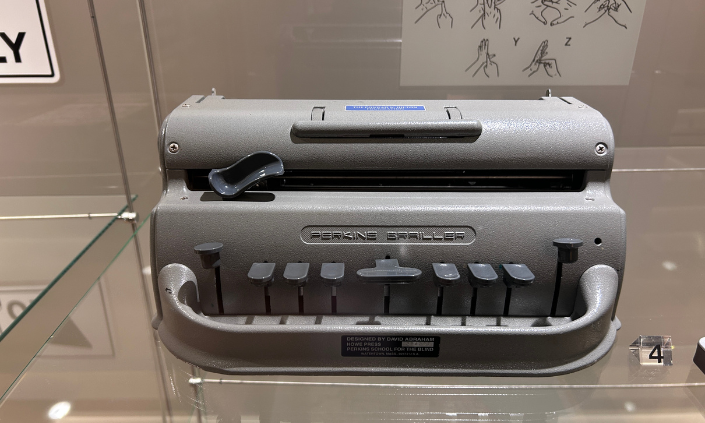
A mechanical typewriter, from the Perkins School for the Blind (1951) is a key item on display. The Perkins Brailler embosses braille onto paper, enabling efficient writing and communication through touch for individuals who are blind or visually-impaired.
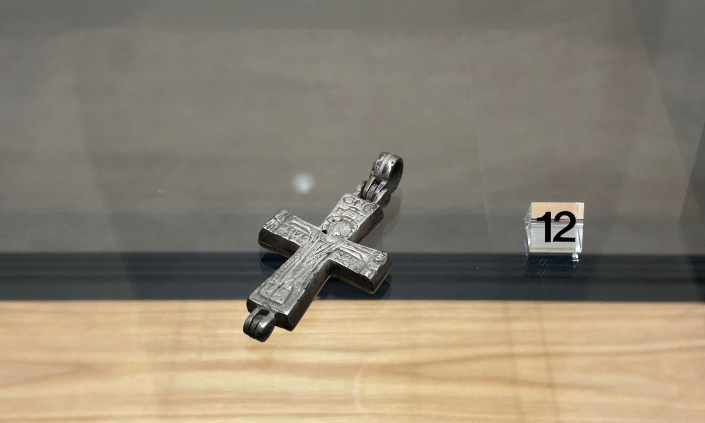
Enkolpia were Christian devotional pendants worn over the chest as both an outward display and an inward reminder of faith. These pendants acted as powerful personal markers and in this exhibition, illustrate how objects and symbols can carry layered meanings.
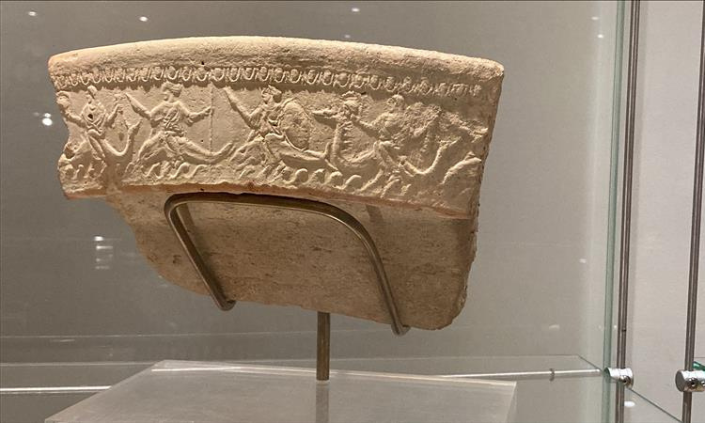
Also on display is a fragment from Ancient Greece, depicting a scene from The Iliad where nereids (sea nymphs) are shown bringing new armour to Achilles. The imagery reflects themes of protection and divine intervention, highlighting Achilles’ heroic status and the close ties between gods and mortals in Ancient Greek culture. The artwork exemplifies the style and storytelling common in the Archaic period.
The shield in the image is especially significant, as upon it is a symbolic construction which depicts all existence: cities at war and at peace, scenes of rural life and a dancing scene evoking human joy and cultural traditions. Beyond all this is Oceanus, the river that surrounds the world. The Iliad encodes this extensive description onto the shield for a narrative purpose, encapsulating what Achilles will fight to defend, and what is at stake in human life.
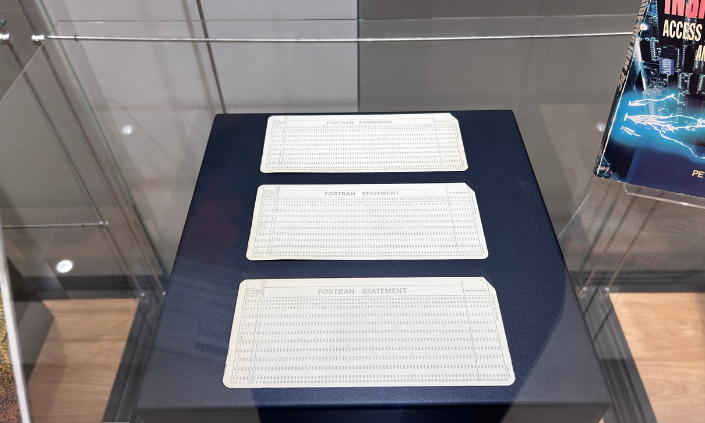
FORTRAN, short for Formula Translation, was one of the earliest programming languages, developed in the 1950s. Each punch card contains a single line of code, with holes representing specific characters. Programmers would stack hundreds of these cards in precise order to be read by a computer. Drop them, and you'd lose your entire program.