A range of learning experiences on offer
The Gale History Museum at Macquarie University offers educational opportunities and resources for school and university students.
Undergraduate Learning Support
The Gale History museum facilitates gallery-based and object-based learning (OBL) tutorials for undergraduate units of study.
If you would like to request objects from the museum's collection for use in OBL tutorials, please complete this form: Object Based Learning - Request Form – Fill out form
If you are interested in learning more about how object-based learning could be used in your teaching, please reach out to us via ghm@mq.edu.au.
School excursions
The Gale History Museum offers a number of excursion opportunities for school students. Our current programs includes:
- Stage 6 Ancient History core study: Cities of Vesuvius – Pompeii and Herculaneum (submit an enquiry)
- Stage 1-2 Geography: Waterways as special places (submit an enquiry)
- Stage 1-3 History Colonial Australia: The White Hart Inn a colonial way-station in Western Sydney (submit an enquiry)
Our rates: Our group excursion rate is $500 (excl. GST). Group sizes are capped at 20 students.
Make a general enquiry: if you wish to make a general enquiry, please email us at ghm@mq.edu.au.
Program overviews
See an overview of each of the programs below.
Pompeii and Herculaneum
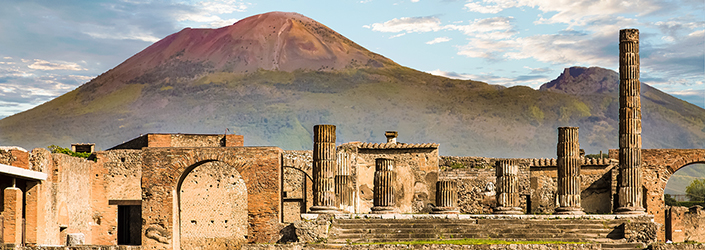
Students will use material culture and object-based analysis to consider how artefactual sources can be used to interpret the past and support historical arguments (AH12-6). They will explore what objects can tell us about everyday life, economy and religion (AHCAH374; ACHAH376; ACHAH377).
Students will learn about the changing nature of excavations at Pompeii and Herculaneum and the importance of these sites for the evolution of archaeology as a scientific discipline (ACHAH383).
They will gain insights into the ways in which new research and technologies are enhancing our understanding of life and society in ancient Roman cities (ACHAH381; ACHAH385).
Make a booking enquiry: EOI - Cities of Vesuvius – Fill out form
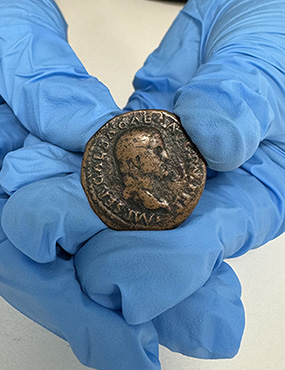
The program includes:
- museum gallery tour with a focus on Roman objects on display
- a gallery-based activity
- object-based learning session in which students will have an opportunity to handle Roman antiquities and develop their analytical skills
- a seminar offering an overview of the history and archaeology of Pompeii and Herculaneum led by
Dr Yvonne Inall, who will share her experiences of excavating at Pompeii with the Anglo-AmericanProject in Pompeii and their important discoveries.
Timetable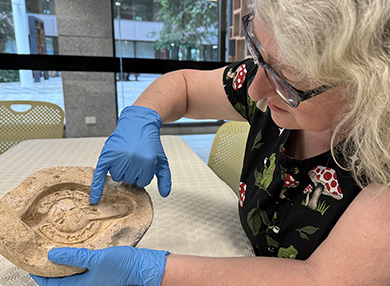
Our program runs over four hours, including lunch, commencing from 10am. Groups are advised to arrive at least 30 minutes prior to commencement to allow for morning tea, toilet breaks, etc. Students will engage in three one-hour sessions, located in the museum gallery and our object-based learning lab.
Make a booking enquiry: EOI - Cities of Vesuvius – Fill out form
The Gale History Museum offers Geography excursions for Stage 1 and Stage 2 students centred on the importance of waterways as significant places (ACHGK002; ACHGK003).
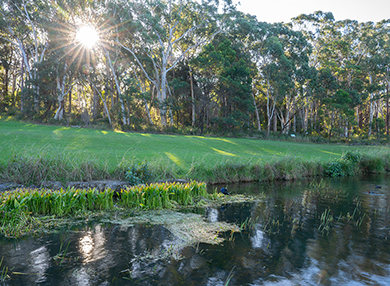
This 2.5-hour program will encourage young learners to engage with museum spaces and the natural world. Students will explore woven objects in the museum gallery and think about interactions with the natural world and how resources may be used sustainably in everyday life.
Students will engage fine motor skills in a weaving activity, producing woven mats as an individual, supervised activity.
Students will engage in close observation of a living waterway familiarising themselves with the features of our hydrological ecosystem. This will be followed by a group activity where learners will simulate a waterways rehabilitation exercise.
Make a booking enquiry: EOI - Geography: Waterways as Special Places – Fill out form
Program Details:
| Time | Activity | Description | Syllabus Link |
|---|---|---|---|
| 11am | Welcome and acknowledgement of country |
| |
| 11.10am | Gallery tour |
| ACHGK002 ACHGK003 ACHGK010 ACHGK011 |
| 11.30am–12pm | Weaving activity |
| ACHGK002 ACHGK003 ACHGK010 ACHGK011 |
| 12–12.30pm | Break | ||
| 12.30-1.30pm | Waterways talk Rivers as special places and places of importance and belonging |
| ACHGK002 ACHGK003 ACHGK010 ACHGK011 ACHGK012 ACHGK014 ACHGK015 ACHGK018 |
| 1.30 pm | Reflection and farewell |
The White Hart Inn a colonial way-station in Western Sydney
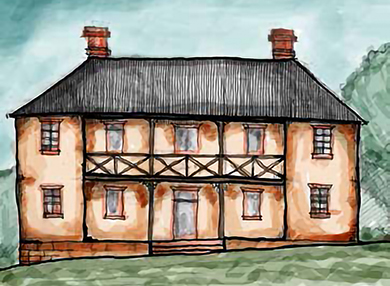
In this program young learners will explore the past and present through the lens of the 19th century colonial White Hart Inn. Students will learn about how people travelled in the past, contrasted against the experience of travel in the present.
The Gale History Museum at Macquarie University holds the archaeological archive from the White Hart Inn site. The site was discovered at Kellyville and excavated during the Sydney Metro expansion.
Evidence of children at the site through material culture such as toys, allows learners to consider the experience of childhood in the past. Students will embody their learning through interactive play with toys and games consistent with 19th century children's experiences.
Experience of place will be explored through a storytelling and mapping exercise, allowing students to develop their own narratives about the past and the present.
Make a booking enquiry: EOI - Colonial Australia – Fill out form
For general enquiries about this program, please email ghm@mq.edu.au
Program details:
| Time | Activity | Description | Syllabus link |
|---|---|---|---|
11am | Welcome: Now and then |
|
|
| 11.25am | Play in the past, play today |
|
|
| 11.45am | Break | ||
| 12pm | Storytime and drawing |
|
|
| 12.30pm | Reflection and farewell |
25C Wally’s Walk
Macquarie University NSW 2109