Rise up
Proving studies can have real-world impact, PhD candidate and Levur founder Tom Collier has created a bioidentical oil without the environmental harm.
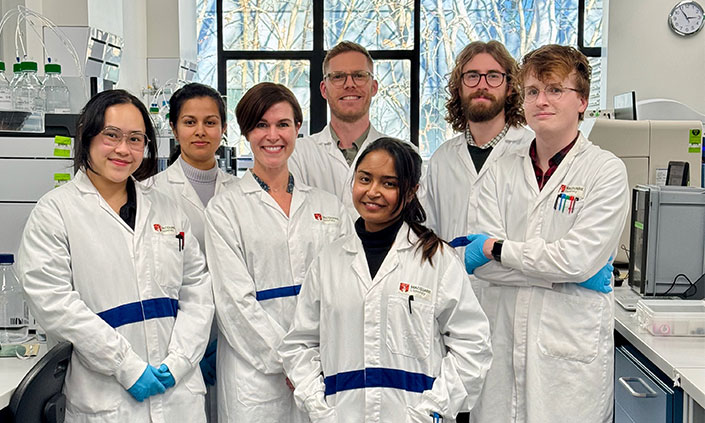
University is supposed to be a time when you meet new people, get inspired and work out what you want to do in the world – maybe even change it. For Tom Collier, who has both a Bachelor and Master of Science in Molecular Biology and is nearing completion of his PhD in Synthetic Biology, studying at Macquarie University has proved to be all this and more.
As an undergraduate fascinated by genetics, Mr Collier was drawn to molecular then synthetic biology for the challenge it presented. "It’s incredible to think we’re at a point in human history, years after the human genome was first sequenced, where we can edit and guide microbes to solve some of the world’s most pressing problems," he says.
From genetic diseases to environmental challenges, biotech is rewriting what’s possible. But back in first year, in 2013, Mr Collier’s interest in engineering microbes was in its infancy, and its potential to solve problems such as global deforestation came about serendipitously.
My girlfriend at the time, who is now my wife, was studying law and anthropology at Macquarie. We were both passionate about the environment, and she’d just returned from Borneo, where she’d volunteered with an organisation that rescues orangutans displaced by deforestation.
"It was both traumatic and moving," says Mr Collier, who goes on to explain that the rich, dense rainforest habitat in Borneo, which is home to thousands of species, is being decimated by the worldwide demand for palm oil, which is in over half of our food and cosmetic products. "Over 29 million hectares is now dedicated to palm trees – that’s larger than New Zealand, and it’s predicted to be four times larger by 2050."
He was hooked. "I remember, instead of studying for my end-of-first-year exams, I was distracted by this huge environmental problem. Thankfully, I still did well and progressed to second year, but was motivated to do better in this world, and my wife and I became committed to doing something about the effects of deforestation in Borneo."
It was in his second year that Mr Collier first contemplated a solution to the ever-increasing demand for palm and other oils globally – one that was identical to those found in nature but without the environmental harm. "It was one of those cliché moments," he laughs. "We’d been studying how to engineer microbes to do certain jobs, and I was in the shower when I suddenly thought, what if we got these microbes to make palm oil, then you wouldn’t need a rainforest."
"I started looking into it and realised it was theoretically possible, so asked some of my professors about it, and while they naturally thought it was quite ambitious for a young 21-year-old to want to solve a global problem, they thought it was a good idea."
So, what exactly is this big idea? "Precision fermentation is the word for it," explains Mr Collier. "It’s like brewing beer, but instead of producing alcohol (ethanol), we change the yeast to one we’ve genetically crafted, and feed it organic waste, which is basically carbon. This directs the yeast to produce molecules that form a usable oil, which is bioidentical to those currently on the market. In our case, the oil serves as a drop-in replacement for palm oil."
The product is grown in a big metal tank. "It’s like a biological factory," he says. "You can get up to density quite quickly. You only need a few hundred to get started, and the next day you have a billion or so identical cells of yeast all working hard to produce our oil."
And it doesn’t stop at palm oil. "We’ve engineered several different proprietary yeast strains that each does a specific job. When we want to make a certain oil, we simply add the right yeast and feedstock into the tank. It’s plug and play."
Then, when it’s time to make a different oil, the tank is reset and a different strain is introduced. "It’s like using different starters for sourdough bread. The yeast strains originally came from natural sources, which we’ve adapted and engineered, but we still work with natural strains, depending on our needs."
The first to do this in Australia, it was an idea that was bubbling along by the end of Mr Collier’s undergraduate degree, and formed the broad brush strokes of his Master of Research project. "I started learning more about which genes to work with, what genetic edits to make, and the equipment needed to analyse and modify them."
"From there, I started my PhD, which was the execution of the idea. It was a highly experimental phase, years of late nights in the lab, but it worked. I was able to show, from that starting strain to the engineered strain, an increase from zero oil production to a lot of oil being produced. Until then, it was all very academic, but these results gave me the confidence to commercialise the idea and create an oil that takes the guilt out of our purchasing habits."
And that’s when Levur Pty Ltd was born. An adaptation of the French word for yeast, "It comes from the Latin, meaning to rise up, which we’ve adopted within the company as a metaphor to do better," says Mr Collier, who’s still finishing his PhD. "It’s been exciting, fast-moving, challenging and rewarding, but the timing was right – Levur is what I thought I could achieve with my skills from Macquarie."
And, in the same way he wasn’t tempted to move to another university for his postgraduate studies, Levur incubates at Macquarie within the Australian Genome Foundry. "It’s a wonderful, inclusive place to work with the best facility in the country for our needs."
"I have to tip my hat to Macquarie. Deputy Vice-Chancellor (Research) Professor Sakkie Pretorius has been an incredible cheerleader for synthetic biology, which is essentially engineering biology for good. He has helped with my research and promoted it."
"He’s an exceptional leader in the university. Ten years ago, he had a vision and attracted significant funding to build some of the best research facilities in Australia, develop outstanding projects, and execute great initiatives that have advanced the research environment. He has made it highly attractive and logical to remain at Macquarie. It’s an exciting place to be, with many people doing incredible things."
Mr Collier says that over the years, he has also received support from the teaching staff and science officers in the Faculty of Natural Sciences, and supporters of synthetic biology research. "Some standouts include Distinguished Professor Ian Paulsen, Dr Roy Walker, Dr Thomas Williams and many more."
With this firm foundation and steady guidance, Levur has grown quickly since it was founded in July 2023. "After three months, I brought on a commercial expert to guide the business, and then added the first R&D scientist. There are now eight synthetic biologists on the team with a knowledgeable commercial COO."
There has also been investment from different sources, including Main Sequence Ventures – CSIRO’s venture arm – and GrainCorp, a major Australian corporate company, as well as a half-a-million-dollar AEA (Australia’s Economic Accelerator) grant with Macquarie University.
"We’re on a long journey to solve a massive 70-billion-ton-per-annum problem," he says, noting Levur is now commercialising its work and building out product teams, with a focus on commercial and product development, and is still open to investors.
And Mr Collier’s wife? "She’s a lawyer now, but helps Levur as an unofficial cheerleader and works for the Borneo Orangutan Survival organisation, which rescues baby orangutans from areas that have been deforested. I couldn’t have achieved what I have in my postgraduate studies or founded Levur if we weren’t both so committed to our overarching environmental goal,’ he acknowledges, and indeed, the couple has been back to Borneo, where it all started, to volunteer."
"Much like human children, young orangutans rely on being shown basic skills – what food to gather, how to make a bed out of leaves, how to migrate, and how to interact within their highly social groups. At the moment, we’re still a pre-revenue biotech company, but in the future, I’d love for some of the profits to go towards supporting important causes like this one."
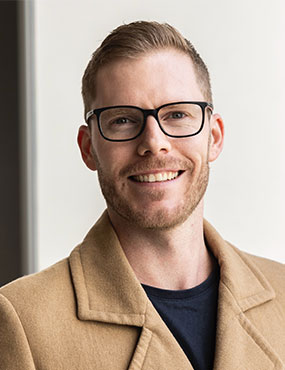
Tom Collier's bio
Tom Collier embarked on his academic journey at Macquarie University, earning a Bachelor of Science degree with a major in Molecular Biology. Following his undergraduate studies, Mr Collier honed his expertise in Synthetic Biology, focusing on sustainable oil production using yeast. His deep interest in this area led him to complete a Master of Research followed by a PhD candidacy at Macquarie University’s Australian Research Council Centre of Excellence in Synthetic Biology (CoESB).
His research revolves around the development of high-throughput methods for yeast-based lipid production. With his experience in genetic design and assembly, as well as quantitative techniques and analysis, Mr Collier has demonstrated a commitment to enhancing sustainable lipid production within yeast. Beyond his research, he is actively involved in the Synthetic Biology community, contributing to the Synthetic Biology Australasian (SBA) society and the Australian Synthetic Biology Challenge (ASBC), leading the next generation of researchers.
In 2023, Mr Collier founded Levur, where he serves as the CEO. Levur harnesses the power of synthetic biology to produce sustainable oils like palm and coconut oils, contributing to a cleaner, greener future.